-
Technology
-
Industry
-
Solutions
-
- ASSET MANAGEMENT
- CUSTOMER EXPERIENCE MANAGEMENT
- CYBER SECURITY
- DATA CENTER
- DOCUMENT MANAGEMENT
- ELECTRONIC DATA INTERCHANGE
- ENTERPRISE DATA MANAGEMENT
- ENTERPRISE RESOURCE PLANNING
- ENTERPRISE RISK MANAGEMENT
- ENTERPRISE-GRADE WEB DATA SOLUTIONS
- FACILITY MANAGEMENT
- FIELD SERVICE
- IDENTITY AND ACCESS MANAGEMENT
- INFRASTRUCTURE
- IT SERVICE MANAGEMENT
- MANAGED IT SERVICES
- PAYMENT AND CARD
- PROJECT MANAGEMENT
- SOFTWARE TESTING
- STORAGE
- VIDEO SOLUTIONS
- WORKFLOW
-
-
Platforms
-
Functions
- Leadership Perspectives
- Innovation Insights
- Research
- Magazines
- News
- CXO Awards


Carolyn Weaver
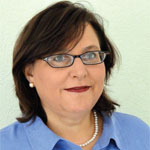 "Physicians are overtaxed with their responsibilities of seeing patients and teaching students. I dream of systems that provide them with intelligent tools at their fingertips and ultimately lead to higher quality patient care."
Carolyn Weaver
CIO
Des Moines University
Carolyn began her IT career over 20 years ago as a consultant for higher education and not-for-profit organizations. She has been instrumental in the success of multiple ERP implementations, and as a result, she has become both a student and a facilitator of organizational change.
Challenge in technology to meet Healthcare enterprise needs in 2013 and expectations
We need sufficient adoption of EHR systems by physicians and other clinical staff to capture the data that will inform and improve patient care safety and quality. Adoption has been a real struggle in our organization. In addition, vendor stability is a key challenge in maintaining continuous adoption. Our organization is currently using an EMR that will no longer be supported by the vendor in 2014. This will require us to dedicate our limited resources to find and implement a new system. While the new system may offer additional opportunities, the process will likely set us back in our quest for physician adoption.
Pain points within the Healthcare enterprise for which solutions do not exist yet or not up to the mark and wish would be available
First, in my environment, physicians are overtaxed with their responsibilities of seeing patients and teaching students. They stay up late at night entering patient notes. I dream of systems that
do not add to physician workload, but those that physicians find easy to use, provide them with intelligent tools at their fingertips and ultimately lead to higher quality patient care. Second, data is currently captured by a variety of systems, including EHR systems and health devices, and stored in different formats, causing interoperability to be a challenge. In the future, a ubiquitous platform is needed to resolve these issues.
What keeps me awake at night is security and compliance. In our small organization, we are challenged with finding the resources to maintain policies and procedures to comply with HITECH and HIPAA regulations and to keep up with the security demands. Data breaches have become so prevalent that it's not a matter of "If ", but a matter of "When."
Using data to head off problems before they happen
We are using data to cut costs and increase our system use. For example, we have used information about the costs for scanning and transcription to encourage our providers to use the EMR more fully for patient notes. We are only beginning the process of tapping into the multitude of possible uses for our data.
IT strategic planning to support organization-wide efforts to improve clinical quality, cut costs and improves efficiency
IT strategic planning is key to these efforts. Any attempts to improve will include a technology solution requiring funding. The comprehensive planning process focuses on attention and resources and creates buy-in.
Technology trends that will have significant impact on your enterprise business environment
First, consumerization of IT and bringyour- own device is a growing reality requiring a strategic support model, and the support challenges continue to be of concern. Second, cloud computing continues to be a promising solution to increase service offerings while cutting costs.
Lessons learned and advice for fellow CIOs
I am most successful when I stay focused on our customers and provide solutions that serve them. While the technology is the focus of most IT staff, you must focus on people first and foremost. I believe that knowing how to manage change while deepening relationships is key to successful technology implementations.